November 20, 2026
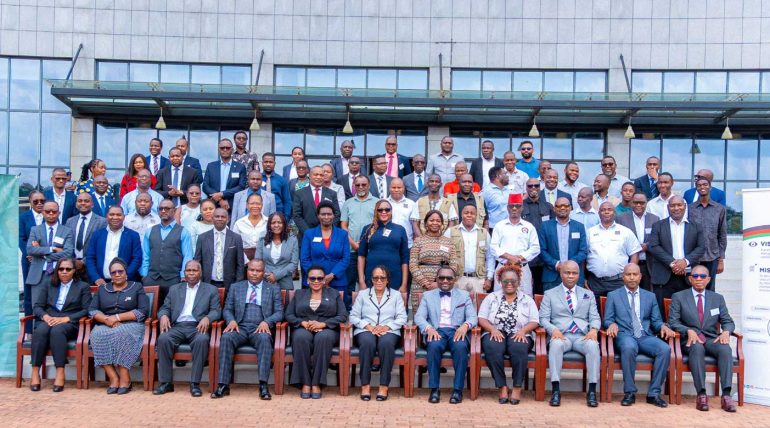
The Malawi Electoral Commission (MEC) on Tuesday 17 November 2026 held a Validation Workshop on its Electoral Risk Management Policy and Framework, bringing together key stakeholders to review the documents and agree on ways of strengthening the management of risks to future elections.
The workshop, held at the Bingu wa Mutharika International Convention Centre (BICC) in Lilongwe, brought together over 50 participants, including representatives of the Judiciary, security institutions, Government ministries, departments and agencies, civil society and research organisations, governance experts, the media, development partners and MEC Commissioners, management, Risk Champions and staff.
Opening the workshop, MEC Chairperson Justice Annabel Mtalimanja said the Commission wants to be better prepared to anticipate threats to elections.
“Credible elections are not achieved on polling day alone. They are built through careful planning, effective institutional coordination, continuous stakeholder engagement and the ability to identify and address potential threats before they escalate into crises,” said Justice Mtalimanja.
She said MEC intends to move away from responding to challenges after they occur towards a proactive and preventive, data-informed approach, and that the Policy and Framework will be used as a practical management tool rather than a document that sits on institutional shelves.
The Chairperson emphasised that electoral risk management is not the Commission’s responsibility alone, explaining that although MEC holds the constitutional mandate to manage elections, political parties and independent contestants, security institutions, the Judiciary, civil society organisations, the media, development partners and citizens all have responsibilities in assuring an environment conducive to peaceful, credible and inclusive elections.
In his welcoming remarks, MEC Acting Chief Elections Officer Mr Andrew Kamkwalala said risk management in the Commission was until recently largely ad hoc and embedded in existing operational processes. He said the Commission therefore approached International IDEA for support in developing a systematic, structured and data-informed approach to electoral risk management.
Speaking on behalf of International IDEA, Ms Vera Muring said elections are the moment when a democracy is most visible and, very often, most vulnerable.
“The strength of an institution is not measured by the absence of risks, but by its ability to anticipate, manage and overcome them,” said Ms Muring.
She disclosed that International IDEA’s engagement with the Commission on this agenda dates back to April 2025, followed by a Context Overview Workshop convened with the African Union in Lilongwe in June 2025, which analysed the risks specific to Malawi and laid the foundation for the documents under review. Ms Muring explained that the Policy sets out the Commission’s institutional commitment and clarifies responsibilities, while the Framework translates that commitment into processes for identifying, assessing, treating, monitoring and reporting risks.
Speaking on behalf of stakeholders, Public Affairs Committee (PAC) Executive Director Mr Robert Phiri said the Framework will help stakeholders understand why the Commission acts as it does when a risk emerges, which promotes trust.
“Electoral risk management is not beneficial to the Commission alone,” said Mr Phiri.
He added that civil society organisations can support the Commission through early warning, civic education and the sharing of accurate information, and noted that early warning must be matched by early response.
The programme included presentations of the draft Policy and the draft Framework by the consultant, plenary technical reviews of both documents, and group discussions on operationalising them, covering institutional responsibilities, coordination mechanisms, risk registers and sustainability. Groups then presented their findings in a plenary session, where recommendations were consolidated.
Closing the workshop, Justice Mtalimanja said MEC does not intend to be an institution that develops impressive policies but lacks the commitment and drive to translate them into practice. She said the Commission will work to integrate the Policy and Framework into its planning, budgeting, decision-making, resource allocation, coordination, monitoring and accountability systems.
The Chairperson urged the technical team and the Commission Secretariat to carefully consider the observations and recommendations made during the workshop so that the final Policy and Framework are comprehensive, practical and responsive to the realities of Malawi’s electoral environment. Looking ahead to the 2030 General Election, she said, the Commission must strengthen institutional and national preparedness and ensure that potential risks are identified, and treatment paths designed before they escalate into crises.
The workshop was made possible through the support of International IDEA and the African Union, with funding from the European Union through the Strengthening Pan-African Capacities for Electoral Observation and Assistance (SPEC) Project.