November 5, 2026
The Malawi Electoral Commission (MEC) has been recognised internationally for its public communication during the 2025 General Election. Its “Weaving the Web of Truth” campaign has been selected as one of 20 Spotlight case studies in the Atlas of Innovation in Public Communication, published by the United Nations Development Programme (UNDP) in collaboration with Catálise Social.
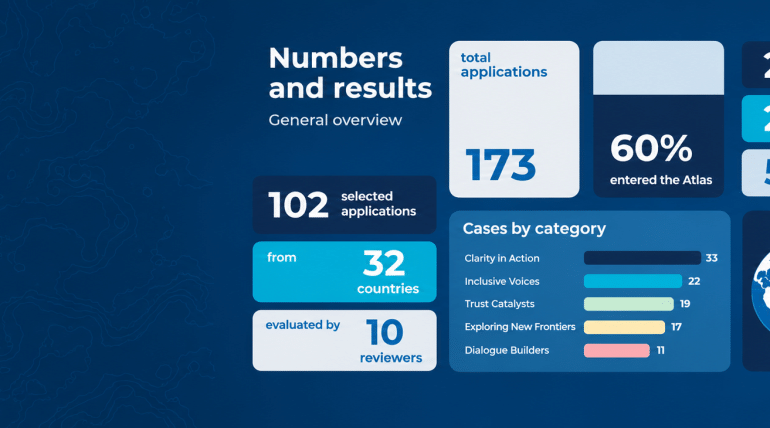
The Atlas was developed to identify and share practices that strengthen transparency, participation, inclusion and trust in public institutions. It received 173 applications from 50 countries, and 102 were selected for inclusion. Spotlight is its highest recognition category, reserved for the cases with the highest overall evaluation scores.
“Weaving the Web of Truth” is a public communication framework developed to coordinate public communication and voter education during the 2025 General Election. It aimed to give voters accurate, timely and reliable electoral information while countering rumours, misinformation and disinformation.
The Atlas describes the environment in which the campaign operated, marked by online disinformation, political polarisation and scepticism about electoral integrity. In response, MEC combined radio, television, SMS, social media, community networks and partnerships with civil society to deliver clear, verified and multilingual voter education, backed by real-time rumour monitoring and rapid-response messaging.
The Atlas reports that more than 9,450 radio and television slots were used and that voter turnout was 76.4% in 2025, compared with 64.8% in the 2020 Fresh Presidential Election. It also notes that incidents of misinformation remained significantly lower than in previous election cycles, despite a more technologically complex environment that included biometric voter verification and new electoral rules. In its summary, the Atlas concludes that the case shows transparent public communication to be a foundation of democratic resilience.
The 20 Spotlight cases come from governments, courts, universities, media, civil society and the private sector. They include a community radio and door-to-door network in rural Colombia, a WhatsApp-based citizen services platform in Kenya, a mobile town hall in Germany and an AI-powered electoral rights guide from the electoral institute of Yucatán, Mexico. Four of the 20 are from Africa: Malawi, Kenya, the Central African Republic and the Democratic Republic of Congo.
MEC says the success of its voter education efforts was the product of joint work by many stakeholders. The Commission dedicates the recognition to its staff, civil society organisations, media houses and community partners who helped share accurate information with the public and registered voters.
The recognition places Malawi’s experience on an international platform and creates opportunities for knowledge-sharing with other election management bodies. It reflects MEC’s commitment to transparent, accessible and timely public communication in fulfilment of its constitutional mandate.
The case study is available at:
https://escuelavirtualpnud.org/pluginfile.php/19145/mod_resource/content/2/preview-en.html