August 23, 2026
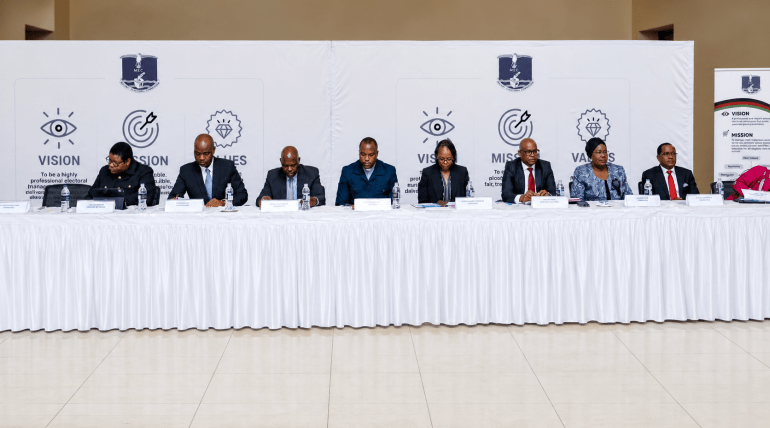
The Malawi Electoral Commission (MEC) on 20 August 2026 held a National Conference on the Post-Election Review (PER) of the 2025 General Election, bringing together key stakeholders to reflect on the conduct of the election, identify lessons and agree for strengthening future electoral processes.
The conference, held in Lilongwe, brought together representatives of political parties, civil society organisations, the media, Judiciary, legal fraternity, Government institutions, election officials, development partners, election observers, academia, faith communities and other stakeholders involved in Malawi’s electoral process.
Opening the conference, MEC Chairperson Justice Annabel Mtalimanja said the review was intended not simply to look back at the 2025 election, but to identify lessons that could improve future elections.
“The purpose was not simply to look backwards, but to learn—we wanted to take stock of and understand what worked well, what did not work as expected, what challenges were encountered, what lessons could be drawn and, importantly, what could be done differently to make future elections even better,” said Justice Mtalimanja.
She said the Commission approached the review with humility and willingness to listen to stakeholders, noting that some of the feedback received was positive, while other submissions challenged the Commission to improve.
The Chairperson emphasised that the Post-Election Review Report should not be regarded as a final catalogue of electoral reforms, explaining that the issues identified would provide a foundation for further reflection through the formal electoral reform process.
United Nations Resident Coordinator in Malawi, Rebecca Adda-Dontoh, commended Malawi for the peaceful conduct of the 2025 election and the constitutional transfer of power.
“A credible post-election review is not the closing chapter of one election; it is the opening chapter of the next,” she said.
Ms Adda-Dontoh disclosed that the review had been informed by consultations with more than 500 stakeholders and identified the period from 2026 to 2028 as a critical window for electoral reforms ahead of 2030.
She encouraged stakeholders to make inclusion measurable, safeguard the integrity of the entire electoral ecosystem and deliberately build public trust in elections.
The conference was made possible through technical and financial support from the Malawi Electoral Support Project (MESP), implemented with support from the UNDP. The UN Resident Coordinator acknowledged the contribution of the Elections Basket Fund donors—the European Union, United States, Ireland, Norway and the United Kingdom—whose support through UNDP, UN Women and MESP has accompanied Malawi’s electoral cycle.
The PER process was facilitated by consultants Dr Augustine Magolowondo and Ms Hannah Roberts, with consultations conducted with stakeholders across the electoral landscape. The national conference provided an opportunity to present the methodology, key findings and recommendations and allow stakeholders to reflect on the findings.
The programme also featured international peer-learning sessions, including Isaac Otieno, Director of Strategy and Institutional Development at the African Centre for Governance in South Africa, who presented on lessons and best practices in moving from post-election review to reform. Dr John Maphephe, Chairperson of the Independent Electoral Commission of Lesotho and Vice-Chairperson of the Electoral Commissions Forum of SADC (ECF-SADC), shared the Lesotho experience on post-election review and electoral reform.
The conference also included plenary discussions on the key findings, a presentation on considerations for the way forward by MEC Director of Legal Services David Matumika Banda, and reflections from participating stakeholders.